
Zion in the Desert
Temple spires, tech startups, and the question of whose place this is now
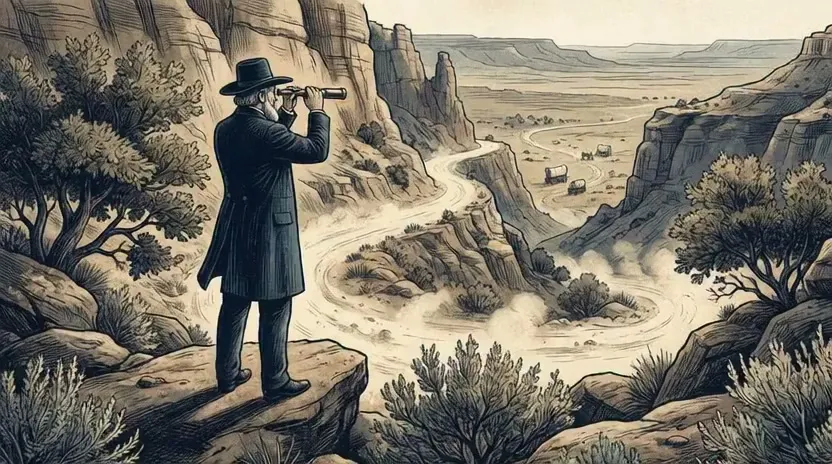
Brigham Young stood at the mouth of Emigration Canyon in July 1847, looked out at the valley below, and declared "This is the place." It was not an obvious choice. The Great Salt Lake was undrinkable, the desert hostile, the isolation total. But that was precisely the point. The Latter-day Saints had been driven from New York to Ohio to Missouri to Illinois, their prophet murdered, their temples burned. They needed somewhere no one else wanted, somewhere they could build Zion without interference. They found it in this bowl of desert between the Wasatch Mountains and the dead sea.
Making the Desert Bloom
They made the desert bloom through sheer collective will. Irrigation canals redirected mountain snowmelt into a grid of city blocks laid out by revelation — each block ten acres, each street 132 feet wide, wide enough for a team of oxen to turn around without cursing. The city was planned before a single building rose, a theocratic grid imposed on wilderness with the certainty of people who believed God had led them here. Temple Square became the center of everything, the Salt Lake Temple taking 40 years to build from granite hauled by ox cart from Little Cottonwood Canyon.
They needed somewhere no one else wanted, somewhere they could build Zion without interference.
The $100 Billion Institution
The Church of Jesus Christ of Latter-day Saints built this city, and the church still owns much of it. The church office building rises 28 stories beside Temple Square, housing a religious bureaucracy that manages a global faith and a corporate empire — hospitals, universities, ranches, media companies, and investment funds worth somewhere north of $100 billion. The faithful pay ten percent of their income in tithing, and the institution has multiplied those tithes into an empire that would make the Vatican envious.
But Salt Lake City is no longer a Mormon city, not in the way it was. The church members are now a minority within city limits, outnumbered by the transplants and apostates and never-believers who have arrived in waves. The tech industry discovered the valley, drawn by cheap land and educated workers and mountains where you can ski during lunch. The 2002 Winter Olympics announced to the world that Salt Lake was more than temple spires and missionary suits. Now the city has craft breweries and coffee shops, Pride parades and meditation studios, all the markers of secular urban life coexisting uneasily with the faith that built the place.
The Mountains Define Everything
The Wasatch Range rises directly east of downtown, a wall of granite and snow that defines the city's character. Within 45 minutes of Temple Square, you can be on a chairlift at Snowbird or Alta, skiing powder that rivals anywhere in the world — "the greatest snow on earth," they call it, and for once the boosterism isn't hyperbole. The mountains trap the weather and the pollution, creating winter inversions where smog settles in the valley like a lid while the peaks above gleam in sunshine.
The outdoor culture is absolute. Mormons ski and hike and mountain bike with the same fervor as the gentiles, and the trailheads on weekends are packed with families and tech workers and retirees. The city empties into the canyons at every opportunity, a mass migration toward altitude and wilderness that happens with the reliability of tides. To live in Salt Lake is to orient your life around the mountains — where you can see them from your window, how quickly you can reach them, what conditions await this weekend.
The Great Salt Lake itself is dying. The lake has lost half its volume since 1847, shrinking as the rivers that feed it are diverted for agriculture and municipal use. The exposed lakebed contains arsenic and heavy metals from a century of mining, and windstorms now carry that toxic dust into the city. The lake that drew the pioneers — they thought it was connected to the Pacific Ocean — may disappear within decades, leaving behind an environmental catastrophe and a name that no longer makes sense.
To live in Salt Lake is to orient your life around the mountains — where you can see them from your window, how quickly you can reach them.
The city sprawls south and west into suburbs that blur the line between Salt Lake and Provo, between city and exurb, between secular and sacred. The suburbs are where the large Mormon families still predominate, where churches anchor every neighborhood, where the cultural conservatism that built Utah persists alongside minivans and Little League. The city center has become something else — younger, queerer, less churched — but drive fifteen minutes in any direction and you're back in Zion.
The Tension Remains
The state liquor laws remain baroque — a remnant of church influence codified into legislation. You cannot buy wine in a grocery store, cannot order a drink without ordering food in many restaurants, cannot walk into a bar without a "club membership" that is really just a cover charge with extra steps. The laws are relaxing slowly, grudgingly, but they still mark Utah as different, still remind everyone that this place was built by teetotalers for teetotalers, and the rest of us are guests.
To live in Salt Lake City is to navigate this tension constantly — between the church and the secular city, between the mountains and the valley, between the water that made settlement possible and the water that is running out. The pioneers came seeking refuge and found it. Their descendants built an empire of faith and capital. Now the city absorbs newcomers who come for the skiing and the startups, who do not care about temple ceremonies or pioneer heritage, who are remaking Salt Lake into something its founders would not recognize and might not approve of. The temple spires still rise above downtown, the mountains still catch the morning light, and the negotiation between what Salt Lake was and what it is becoming continues in every city council meeting and real estate transaction and awkward conversation about religion.
This is still the place. The question is: whose place is it now?