1
Pink Pony (Original)
1949–2009Scottsdale
The Story
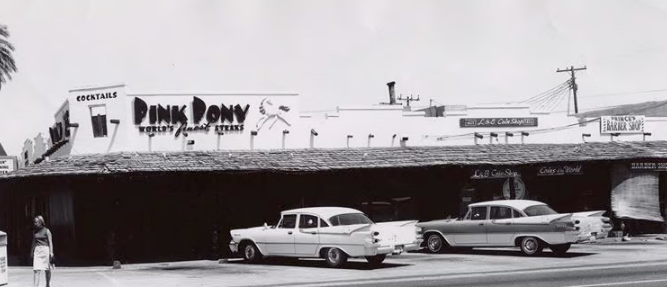
Roger Angell called it "The Best Baseball Bar in the Land." Willie Mays drank there. Mickey Mantle had his seat. Gene Autry had his booth. Clark Gable lit up at the bar. Robert Wagner and Natalie Wood dined there on their wedding night. For 60 years, the Pink Pony was where baseball's elite held court during Spring Training.
Why It's Missed
The ghosts. A new ownership reopened the name elsewhere, but the original Pink Pony—dark, smoky, drowning in Hall of Famer mythology—is gone forever. What remains is tribute act, not resurrection.
"Charlie Briley ran the place from 1950 until his death in 2002 as a steakhouse, drinking hole and hangout for the Who's Who of baseball." — Salt River Stories
Last Known Address
3831 N Scottsdale Rd, Scottsdale2
Barrio Cafe
2002–202416th Street
The Story
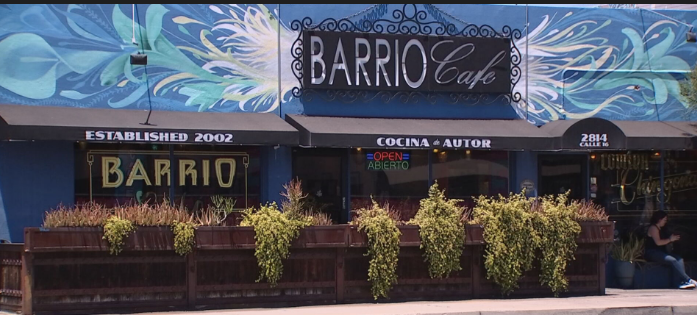
Chef Silvana Salcido Esparza opened Barrio Cafe with $38,000 in a neighborhood nobody wanted. Twenty-two years later, it had transformed Phoenix's Mexican food scene—credited with launching Mexican cuisine into the fine dining realm. Eight James Beard nominations. Visits from President Biden. A movement she called "modern Mexican."
Why It's Missed
The ambition. Esparza proved Phoenix could sustain world-class Mexican fine dining. When she retired due to illness in 2024, she took something irreplaceable with her—the proof that respect and excellence could coexist on a plate of mole.
"My purpose has always been to change erroneous perceptions that North Americans have of Mexican food and Mexican culture." — Chef Silvana Salcido Esparza
Last Known Address
2814 N 16th St, Phoenix3
BS West
1988–2024Old Town Scottsdale
The Story
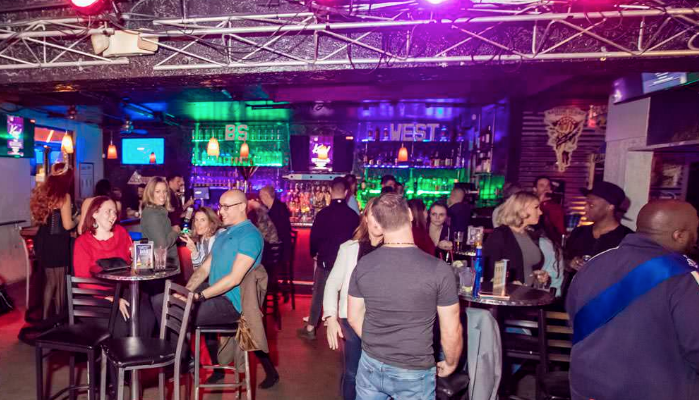
For 35 years, BS West was Scottsdale's only LGBTQ+ nightclub—two bars, patios, lounges, and a dance floor. It opened when being openly gay in Arizona still carried real risks. Pre-internet, pre-apps, pre-marriage equality, this was where the community found each other.
Why It's Missed
BS West opened in 1988, when Arizona was still a place where being openly gay could cost you your job, your family, your safety. For 35 years, it was the one reliable gathering place in Scottsdale—the implicit promise that you belonged. Before the internet, before apps, before marriage equality, this was how the community found each other. The building is now a vacant lot. Thirty-five years of history, bulldozed overnight.
"BS West was an important part of a lot of people's lives. These spots were where you found companionship and rallied the community." — 12 News viewer
Last Known Address
7125 E 5th Ave, ScottsdaleSponsored Pick
Advertisements help support our content
4
Monti's La Casa Vieja
1956–2014Downtown Tempe
The Story
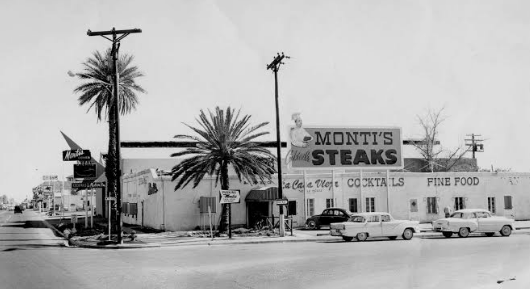
For nearly 60 years, Monti's served steaks and Roman bread inside the historic 1873 Hayden House—the oldest continuously occupied structure in the Salt River Valley. Arizona's first Congressman was born in that building. Monti's was where generations watched ASU games, celebrated milestones, and ordered the Monti Burger.
Why It's Missed
The history. The Roman bread. The 14 dining rooms inside a building older than Arizona statehood. When the property sold for development in 2014, Tempe lost its oldest restaurant and the last physical connection to its pre-concrete past.
"The decision came after rising beef costs and other business costs became too much. A piece of Arizona history closed its doors." — Phoenix New Times
Last Known Address
100 S Mill Ave, Tempe5
MercBar
1996–2024Esplanade / Biltmore
The Story
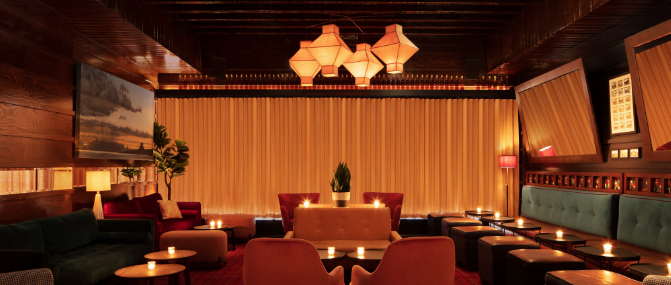
For 28 years, MercBar was Phoenix's craft cocktail pioneer—a sleek New York import hidden behind a tiny golden plaque. Brad Pitt, George Clooney, and Michael Jordan slipped through those doors. The complimentary Goldfish crackers became legendary. A $1 million renovation in 2019 couldn't save it from COVID and changing times.
Why It's Missed
The sophistication. Before craft cocktails became ubiquitous, MercBar taught Phoenix what a proper drink could be. It proved the city could sustain something elegant and subtle—no gimmicks, just skill. Twenty-eight years later, everyone knows how to make a good cocktail. MercBar doesn't get credit.
"28 years, 10,000 nights, hundreds of thousands of Cosmos, Sophia Lorens and Goldfish later, we're saying goodbye." — Owner Rick Phillips
Last Known Address
2525 E Camelback Rd, Phoenix6
Sing High Chop Suey House
1928–2018Downtown Phoenix
The Story
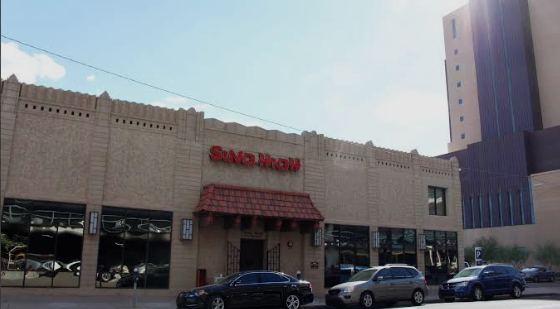
For 90 years, three generations of the Lee family served Cantonese food from a building that was once part of Phoenix's Chinatown. The Lee who closed it started washing dishes there at age six. In its final week, customers signed the walls with messages—a handwritten eulogy across every surface.
Why It's Missed
The continuity. Ninety years, one family, one building. The last tangible connection to Phoenix's Chinese-American history downtown. When it closed in 2018, an entire era of immigrant Phoenix disappeared with it.
"The walls became covered with heartfelt messages from longtime customers. Everyone wanted to leave their mark." — ABC15
Last Known Address
27 W Madison St, PhoenixSponsored Pick
Advertisements help support our content
7
Carly's Bistro
2005–2024Roosevelt Row
The Story
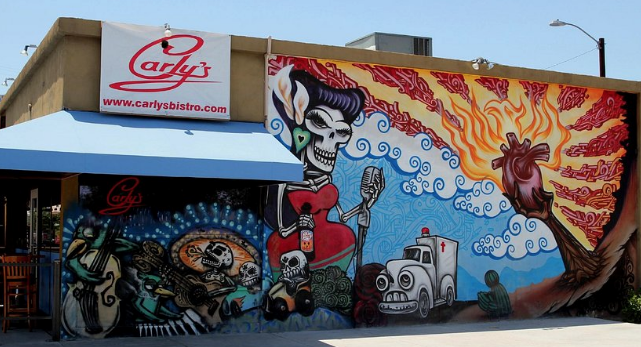
Before Roosevelt Row was trendy, Carla Wade Logan took a chance on it. For 20 years, Carly's was the creative heart of downtown—local art on the walls, musicians in the corner, murals by Lalo Cota outside. It closed after one final First Friday packed with the artists who'd found a home there.
Why It's Missed
Carly's was the living room of Roosevelt Row before Roosevelt Row existed as a concept. When Carla Wade Logan opened in 2005, downtown Phoenix was still empty storefronts and uncertainty. Artists came because they could afford it. Musicians came because she'd let them play. For 20 years, every First Friday started or ended at Carly's. The final night in 2024 packed the place with people who'd met their collaborators, their partners, their creative communities in that space. The building is still there. The soul isn't.
"It was always our vision that the space be somewhere artists could show work, musicians could play, and people could gather and discuss creative ideas." — John Logan
Last Known Address
128 E Roosevelt St, Phoenix8
Mary Elaine's
1988–2008The Phoenician
The Story
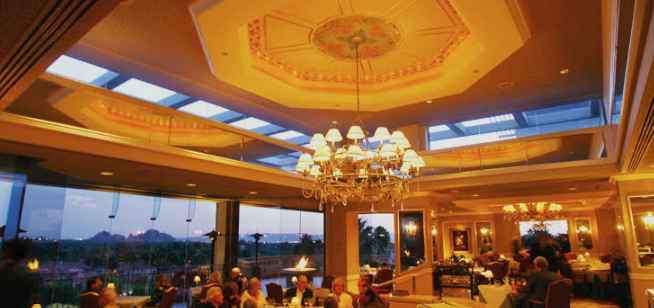
The only AAA Five Diamond restaurant in Arizona history sat atop The Phoenician with a 40,000-bottle wine cellar. James Beard-recognized chefs. "Purse stools" for every table. For 20 years, Mary Elaine's was where Phoenix proved it could compete with any city for fine dining.
Why It's Missed
For 20 years, Mary Elaine's was the only AAA Five Diamond restaurant in Arizona—perched atop The Phoenician with a 40,000-bottle wine cellar, James Beard-recognized chefs, and the kind of "purse stools" at every table that signals a certain level of seriousness. When Phoenix wanted to prove it could compete with New York or San Francisco, Mary Elaine's was the evidence. It closed in 2008, victim of the recession and changing tastes. The space has been reimagined multiple times since. Nothing has recaptured what it meant.
"At its peak, Mary Elaine's was mentioned in the same breath as the best restaurants in New York and San Francisco." — Phoenix New Times
Last Known Address
6000 E Camelback Rd, Scottsdale9
Bill Johnson's Big Apple
1956–2015Van Buren Street
The Story
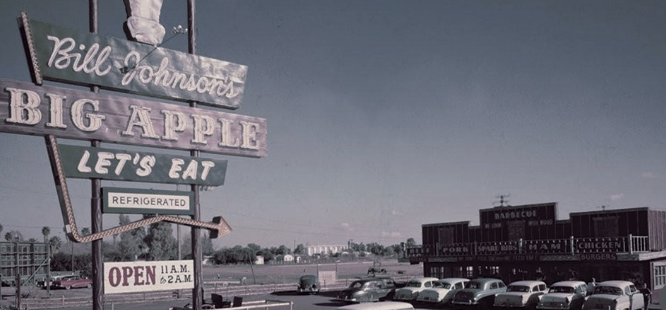
Bill Johnson was a radio host, actor, stuntman, and hypnotist who opened a cowboy-themed restaurant with his wife Gene. For 59 years, the "Let's Eat" neon sign glowed on Van Buren. Johnny Cash ate there. Wayne Newton ate there. The dance craze it was named for was long forgotten, but the chuckwagon food never changed.
Why It's Missed
Bill Johnson himself was a walking Arizona legend—radio host, actor, stuntman, hypnotist—and his restaurant matched the personality. The "Let's Eat" neon sign glowed on Van Buren for 59 years. Johnny Cash ate there. Wayne Newton ate there. Generations of Phoenix families celebrated birthdays over chuckwagon food that never tried to be anything other than what it was. On the last day in 2015, people waited 90 minutes just to say goodbye. The building is now a parking lot. The neon sign is probably in a collector's garage.
"On its last day, you had to wait an hour and a half to be seated. Everybody was there—including people who wanted to take a final look." — Phoenix New Times
Last Known Address
3757 E Van Buren St, PhoenixSponsored Pick
Advertisements help support our content
10
Don & Charlie's
1981–2019Scottsdale
The Story
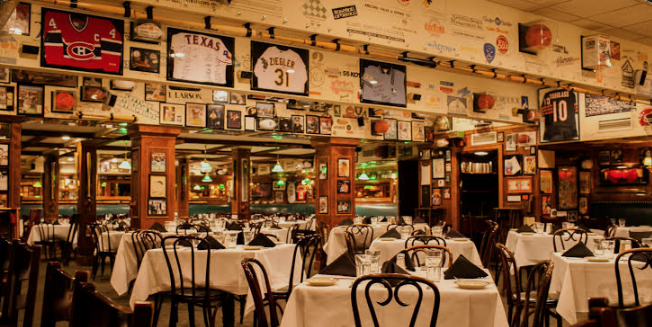
The Chicago-style chophouse with "one of the best collections of baseball memorabilia next to Cooperstown." Babe Ruth's signature. Joe DiMaggio's glove. Spring training managers made deals over steaks. Shortly before closing, thieves stole $600,000 worth of signed baseballs. The building became a hotel.
Why It's Missed
The walls. Forty years of baseball history—signatures, gloves, photos, the accumulated proof that legends ate here. Then, shortly before closing, thieves stole $600,000 worth of signed baseballs. Insult, meet injury. The building is now a hotel. The ghosts went to Cooperstown.
"It was not unusual to see celebrity players from every sport dining there. Don & Charlie's was a Scottsdale landmark with a national reputation." — East Valley Tribune
Last Known Address
7501 E Camelback Rd, Scottsdale11
Devil's Advocate
2009–2024Tempe
The Story
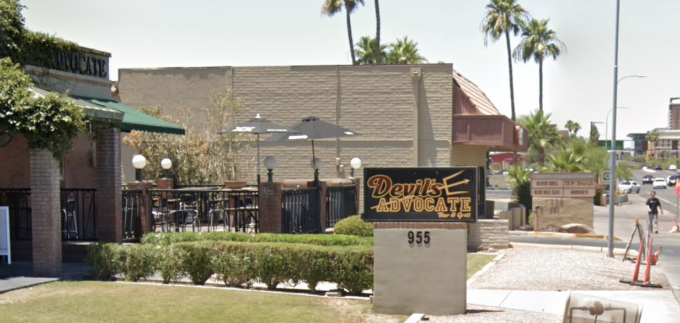
For 15 years, Devil's Advocate was the college bar for ASU students and Sun Devils fans. The land sold to become luxury apartments. Another Tempe institution replaced by the same development pattern—bar closes, apartments rise, students find somewhere else.
Why It's Missed
The pattern. Fifteen years of game days, graduation celebrations, and late nights, then the land underneath sold for luxury apartments. Another Tempe bar pushed off Mill Avenue by the economics of growth. The students will find somewhere else. They always do. But the somewhere else keeps getting further away.
"The land underneath the bar has been sold. Another Tempe bar lost to luxury apartments." — Phoenix New Times
Last Known Address
640 S Mill Ave, Tempe12
Cowboy Ciao
1997–2018Old Town Scottsdale
The Story
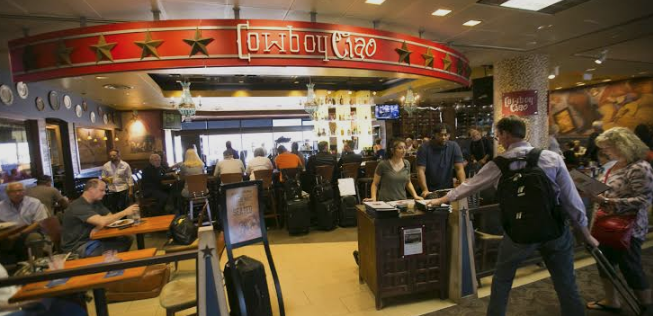
For 21 years, Cowboy Ciao brought rustic elegance to Old Town—the famous Stetson Chopped Salad, the inventive southwestern menu, the wine program that won awards. It influenced how Scottsdale thought about dining. The salad lives on at other restaurants, but the original room is gone.
Why It's Missed
The innovation. Cowboy Ciao showed Scottsdale that local dining could be both creative and refined—not precious, not pretentious, just excellent. The Stetson Chopped Salad became so iconic that imitators still serve versions. Flattery, but not replacement.
"The Stetson Chopped Salad became so iconic that other restaurants still serve versions of it today." — Phoenix New Times
Last Known Address
7133 E Stetson Dr, ScottsdaleSponsored Pick
Advertisements help support our content
13
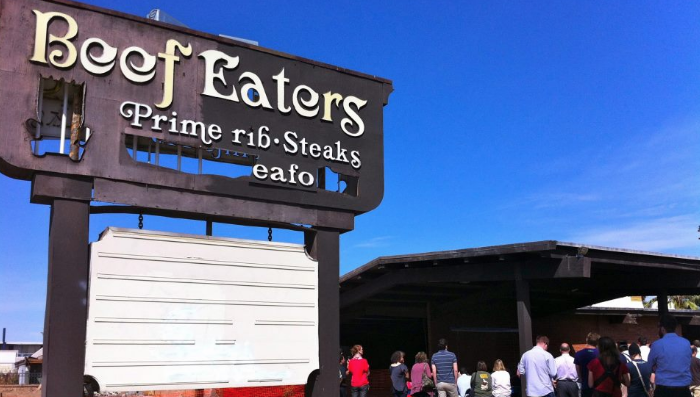
Beef Eaters
1961–2006Camelback
The Story
For 45 years, Beef Eaters brought British fine dining to the desert—chandeliers, wood paneling, and steaks served with proper formality. It was old Phoenix glamour in a city that was just beginning to understand what that meant.
Why It's Missed
The elegance. That kind of dark, chandeliered, wood-paneled formality doesn't exist in Phoenix anymore. Beef Eaters represented a different era of dining—when dressing up for dinner meant something, and the waiter knew your name because you'd been coming for decades.
"Beef Eaters represented a different era of Phoenix dining—formal, elegant, unhurried." — Phoenix New Times
Last Known Address
300 W Camelback Rd, Phoenix14
The Bikini Lounge
1946–2019Downtown Phoenix
The Story
The dive bar with a neon sign, cheap drinks, and a jukebox that leaned Patsy Cline and Johnny Cash. For 73 years, it was where downtown Phoenix drank without judgment. The bartenders were legendary, the vibe unreconstructed, and the clientele diverse. It closed in 2019 when the building was sold.
Why It's Missed
The neon sign, the jukebox, and the sense that downtown Phoenix could still have authentic dive bars. The Bikini Lounge was proof that old Phoenix survived.
"The Bikini Lounge was the anti-Scottsdale." — Phoenix New Times
Last Known Address
1502 Grand Ave, Phoenix15
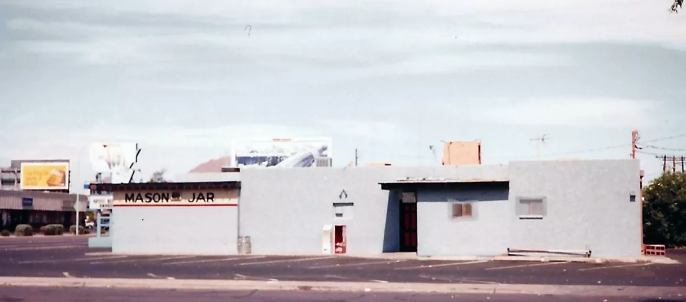
The Mason Jar
2005–2020Downtown Phoenix
The Story
The indie music venue in a converted Masonic temple that hosted touring bands, local acts, and the occasional album release party. For 15 years, it was where Phoenix's music scene gathered. The pandemic closed it, and Phoenix lost its best small venue.
Why It's Missed
The intimacy, the commitment to live music, and the knowledge that you could see tomorrow's headliners in a room that held 200 people. The Mason Jar proved Phoenix had taste.
"The Mason Jar was where Phoenix's music scene lived." — Phoenix New Times
Last Known Address
2303 E Indian School Rd, PhoenixSponsored Pick
Advertisements help support our content
16
Monti's La Casa Vieja
1924–2014Tempe
The Story
The steakhouse in an 1870s adobe house that served beef and martinis to ASU students, faculty, and Phoenix families for 90 years. The building was historic, the vibe old Arizona, and the portions generous. When it closed in 2014, Tempe lost its most historic restaurant.
Why It's Missed
The adobe walls, the sense of continuity, and the beef that tasted like Arizona before air conditioning. Monti's was proof that Tempe had history.
"Monti's was where Tempe went to remember it was older than ASU." — Arizona Republic
Last Known Address
3 W 1st St, Tempe17
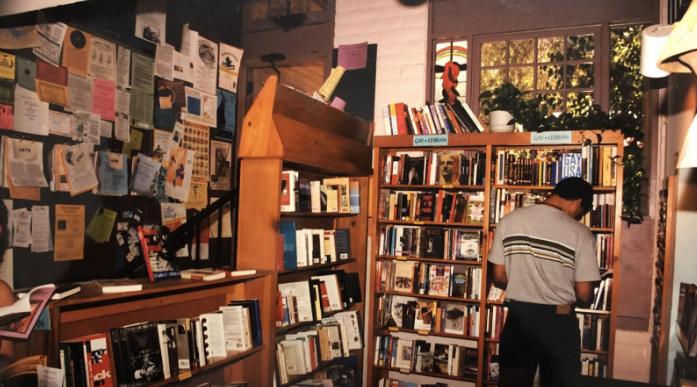
Changing Hands Bookstore (original Tempe location)
1974–2008Tempe
The Story
Before it moved to a larger space, Changing Hands was a cramped independent bookstore near ASU with knowledgeable staff and a commitment to literary fiction. The original location closed in 2008 when the store moved. Changing Hands still exists, but the original location felt different.
Why It's Missed
The intimacy, the staff recommendations, and the sense that Tempe valued books. The original Changing Hands was where ASU students discovered literature.
"Changing Hands made Tempe feel intellectual." — Phoenix New Times
Last Known Address
414 S Mill Ave, Tempe18
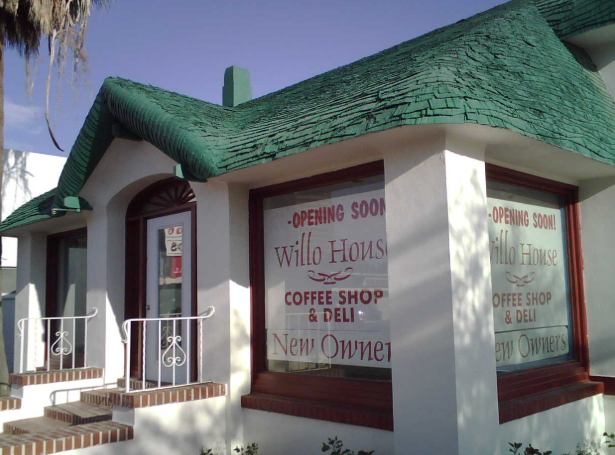
Willow House
2007–2018Downtown Phoenix
The Story
The indie coffee shop and performance space in a converted house downtown, with poetry readings, acoustic shows, and a vibe that felt imported from Portland. For 11 years, it was where Phoenix's creative class gathered. It closed in 2018 when the building was sold.
Why It's Missed
The poetry readings, the sense that Phoenix could have a creative scene, and the commitment to art over profit. Willow House was proof that Phoenix could be weird.
"Willow House was where Phoenix's artists felt at home." — Phoenix New Times
Last Known Address
149 W McDowell Rd, PhoenixSponsored Pick
Advertisements help support our content
19
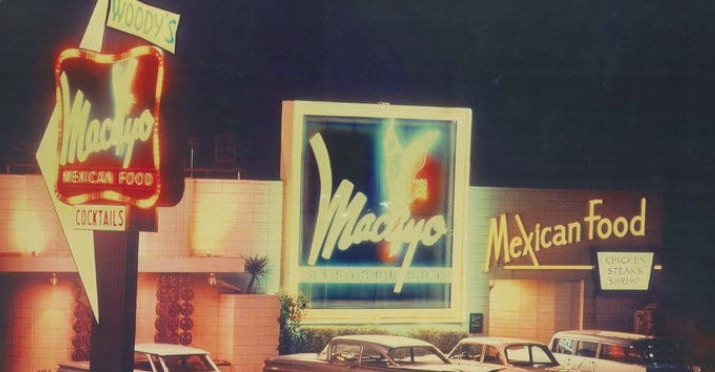
Macayo's (original location)
1946–2017Central Phoenix
The Story
The family-owned Mexican restaurant chain started by Woody Johnson, with the original location on Central Avenue. For 71 years, it served enchiladas and margaritas to Phoenix families. Other Macayo's locations remain, but the original Central Avenue location—where it all started—closed in 2017.
Why It's Missed
The history, the sense that Phoenix had homegrown Mexican restaurants, and the original location's connection to old Phoenix. The Central Avenue Macayo's was the mothership.
"Macayo's was where Phoenix families ate for generations." — Arizona Republic
Last Known Address
4001 N Central Ave, PhoenixStay curious
New stories and hidden gems delivered to your inbox.
No spam. Unsubscribe anytime.
Explore More
Discover more curated guides and local favorites.
Phoenix's Best Bars
Dive bars, cocktail lounges, and neighborhood favorites
Explore
Phoenix's Best Coffee Shops
Local roasters, cozy cafes, and third wave spots
Explore
Phoenix's Best Restaurants
From fine dining to hidden gems and local favorites
Explore
Phoenix's Dark History
Unsolved mysteries and darker chapters
Explore
Phoenix's Curiosities
Fascinating facts and surprising stories
Explore
Phoenix's Hidden Gems
Secret spots and local treasures
Explore
Phoenix's Lost Phoenix
Beloved places we miss
Explore
Minneapolis Best Bars
Dive bars, cocktail lounges, and neighborhood favorites
Explore
Know something we missed? Have a correction?
We'd love to hear from you