Hidden Tampa
The stuff guidebooks skip and locals gatekeep
Tampa has layers. The cigar vaults beneath bar floors. The Prohibition-era passages that connected factories to gambling dens. The immigrant cottages most visitors walk right past. This is the Tampa that rewards the curious—places that don't advertise and don't need to.
1
Ybor City Underground Tunnels
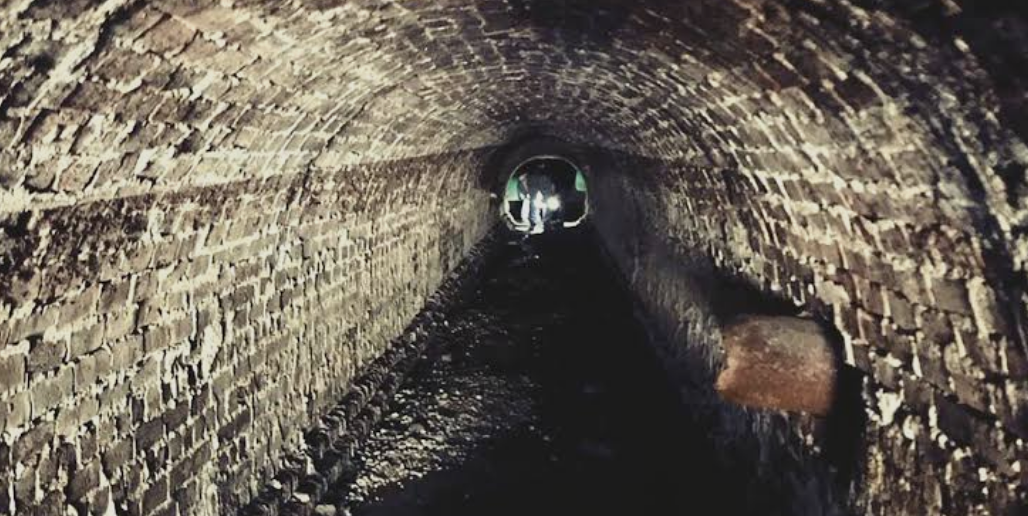
Beneath the brick streets of Ybor City runs a network of underground tunnels that served as Prohibition's hidden highway. During the 1920s and early 1930s, bootleggers moved illegal liquor through these passages connecting cigar factories, restaurants, and speakeasies — most notably linking the Columbia Restaurant to the nearby Cherokee Club casino. The tunnels were originally built as utility corridors and storage spaces in the 1880s-1900s when Ybor was being developed, but took on new life when the 18th Amendment made alcohol illegal. Some sections featured brick archways tall enough to walk through upright; others were cramped crawl spaces. Local historians believe the tunnel system was far more extensive than currently documented, with many passages sealed or collapsed over the decades. Urban explorers occasionally discover unmarked entrances in building basements, though most access points have been permanently closed. The full extent of the network remains unmapped, and stories persist of sealed rooms still containing old bottles and gambling equipment.
2
The Bricks Cigar Vault
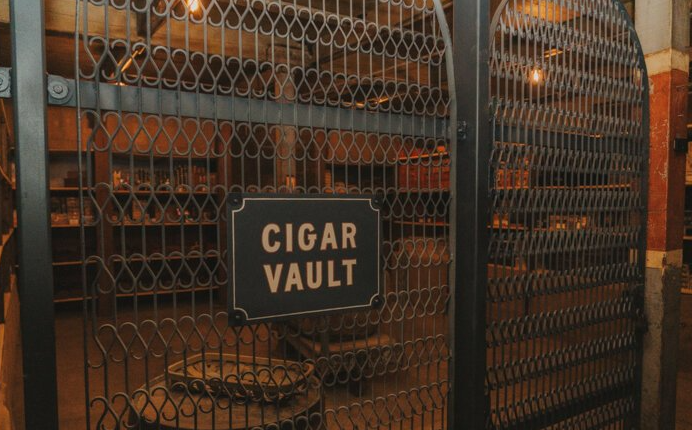
Descend the stairs at The Bricks on 7th Avenue and you'll find something most patrons never see: an original brick-walled cigar storage vault from the 1800s, preserved exactly as it was when this building served Ybor's cigar industry. The thick walls and controlled humidity made it perfect for aging premium cigars before they were shipped worldwide. The vault sits directly beneath the bar, its arched brick ceiling and heavy wooden doors still intact. Temperature and humidity were carefully controlled even before modern climate systems — the brick construction naturally regulated conditions. During Prohibition, spaces like this were allegedly repurposed for storing bootleg liquor. Today, the vault occasionally opens for private tastings and special events, but most people drinking upstairs have no idea it exists. The Bricks — run by the Skatepark of Tampa crew since 2010 — has kept the space largely unchanged as a nod to Ybor's industrial heritage.
3
Sulphur Springs Water Tower
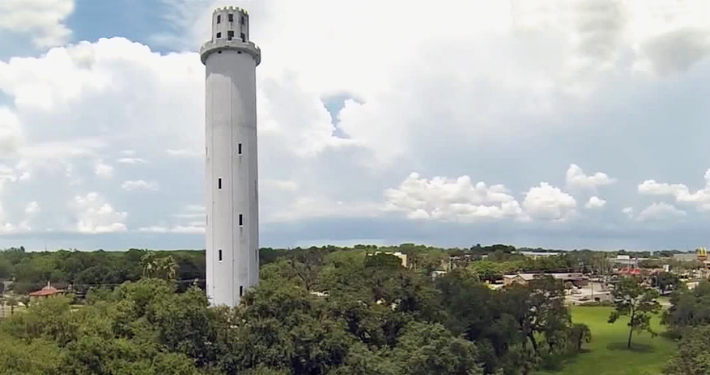
Rising 214 feet above North Tampa, this abandoned water tower and arcade complex is a monument to dreams that didn't quite pan out. In the 1920s, Sulphur Springs was marketed as Tampa's premier health resort — visitors came from across the country to bathe in mineral springs advertised as having miraculous healing properties. The tower, built in 1927, housed a swimming pool, arcade, and observation deck. The Art Deco structure was designed by architect Francis J. Kennard and featured a distinctive octagonal shape that made it a local landmark. At its peak, the complex drew thousands of visitors who believed the sulfurous water could cure everything from rheumatism to skin diseases. The springs are still there — you can smell the sulfur — but the tower has been empty since the 1980s. The pool is drained, windows are broken, and vegetation creeps up the sides. Every few years, developers announce grand plans to renovate it into condos, a restaurant, or a museum. Nothing ever happens. The city of Tampa owns it now, and it sits fenced off, slowly deteriorating. Locals have mixed feelings: some see it as a tragic waste, others as a beautiful ruin best left alone.
Sponsored Pick
Advertisements help support our content
4
Lettuce Lake Park
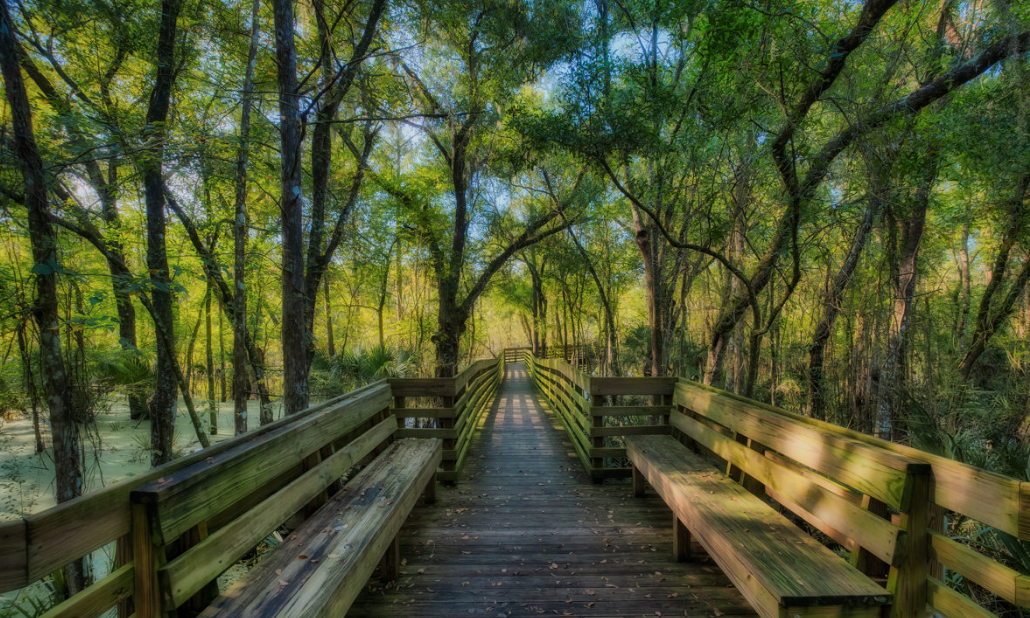
A 3,500-foot elevated boardwalk winds through old-growth cypress swamps where Spanish moss drapes from trees and alligators sun themselves on logs just feet away. Lettuce Lake feels like the Everglades, but it's actually in North Tampa, minutes from USF. The park sits on the Hillsborough River and preserves one of the last undeveloped stretches of riverfront in the area. Great blue herons, anhingas, turtles, and occasionally river otters appear along the boardwalk. Early morning is best — the light filters through the canopy, mist rises off the water, and wildlife is most active. The boardwalk leads to an observation tower offering panoramic swamp views. Canoe and kayak rentals let you explore the river itself, paddling beneath low-hanging branches where it feels genuinely wild. Despite being surrounded by suburban sprawl, the park remains remarkably undisturbed. It's one of Tampa's best-kept secrets for nature access without leaving the city.
5
University of Tampa Plant Museum Courtyard
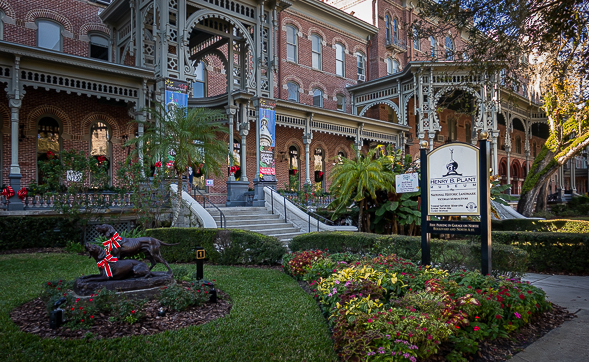
Step inside Plant Hall's Henry B. Plant Museum and you'll find a Victorian-era courtyard that most visitors miss entirely. The interior garden features Moorish-style horseshoe arches, ornate hand-painted tilework, bubbling fountains, and tropical plants identical to those that grew here in 1891 when railroad magnate Henry Plant built his Tampa Bay Hotel. The courtyard served as a social gathering space for Gilded Age guests — including Teddy Roosevelt's Rough Riders, who stayed here before shipping out to Cuba during the Spanish-American War. The tilework is original: intricate geometric patterns in blues, yellows, and greens imported from Spain and North Africa. The fountains still work, their gentle trickling creating an oasis atmosphere. Palm fronds and ferns cascade from planters, and wrought-iron benches invite lingering. Most tourists rush through to see the museum exhibits or climb the iconic silver minarets, completely bypassing this hidden garden. It's open during museum hours, free to enter, and almost always empty — a pocket of 19th-century luxury preserved in the middle of a college campus.
401 W Kennedy BlvdTampa, FL 33606
WebsiteTue-Sat 10am-5pm, Sun 12pm-5pm
$10 museum admission (includes courtyard access)
6
The Jose Martí Statue's Hidden Door
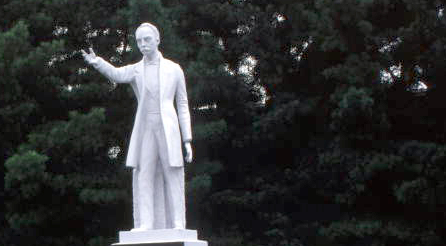
Standing in José Martí Park at the heart of Ybor City, the bronze statue of Cuba's national hero conceals a secret that most visitors never discover: a small hidden door at its base that opens to reveal a time capsule placed in 1956. The statue was dedicated on May 20, 1956, commemorating the 54th anniversary of Cuban independence, and the capsule was sealed inside containing documents, photographs, and artifacts from Tampa's Cuban immigrant community. But the statue's most remarkable feature isn't the capsule—it's where it stands. The park itself, at 1302 E 8th Avenue, was officially deeded to the Republic of Cuba in 1956 and remains sovereign Cuban territory to this day, making it one of the only pieces of foreign sovereign soil in the United States outside of embassy grounds. Fidel Castro gave a speech here in 1955 while raising funds for the revolution that would overthrow Batista. The statue depicts Martí—poet, journalist, and revolutionary who died fighting for Cuban independence in 1895—in heroic stance, his words inscribed on the pedestal. The park hosts annual gatherings on Cuban holidays, and the statue remains a gathering place for Tampa's Cuban-American community. Few visitors realize they're technically standing on Cuban soil. Fewer still know about the door.
Sponsored Pick
Advertisements help support our content
7
Whimzeyland
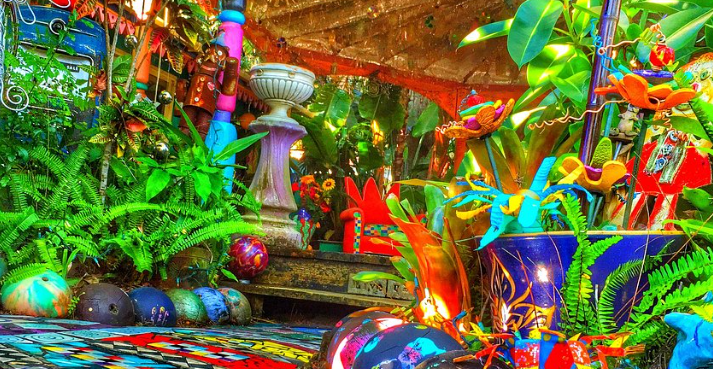
In Safety Harbor, artists Todd Ramquist and Kiaralinda have spent over 35 years transforming their home and neighboring properties into one of Florida's most spectacular folk art environments. Originally known as the "Bowling Ball House," Whimzeyland now features over 600 painted bowling balls arranged in pyramids, walls, and sculptures across a yard exploding with color and creativity. Every surface is covered in mosaic pathways, recycled shrines, bottle gardens, wire art daisies, mermaid carvings, and ceramic sculptures that create an almost otherworldly atmosphere. The artists bought the modest home in 1987 and have never stopped adding to it—turning found objects, discarded materials, and pure imagination into a continuous artwork that evolves with each visit. Featured on HGTV's Extreme Homes and MTV Extreme Cribs, Whimzeyland has become a pilgrimage site for folk art enthusiasts and a beloved Safety Harbor landmark. The yard is open daily for self-guided tours, or you can book a docent-led tour through the adjacent Safety Harbor Art and Music Center (SHAMc), another project the artists helped create. This is someone's actual home, so visitors are asked to be respectful, but the artists genuinely welcome people who appreciate handmade creativity over manicured lawns.
1206 3rd St NSafety Harbor, FL 34695
WebsiteDaily 10am-5pm (outdoor yard only)
Free for self-guided; tours available through SHAMc
8
Ybor City Museum's Cigar Worker Casitas
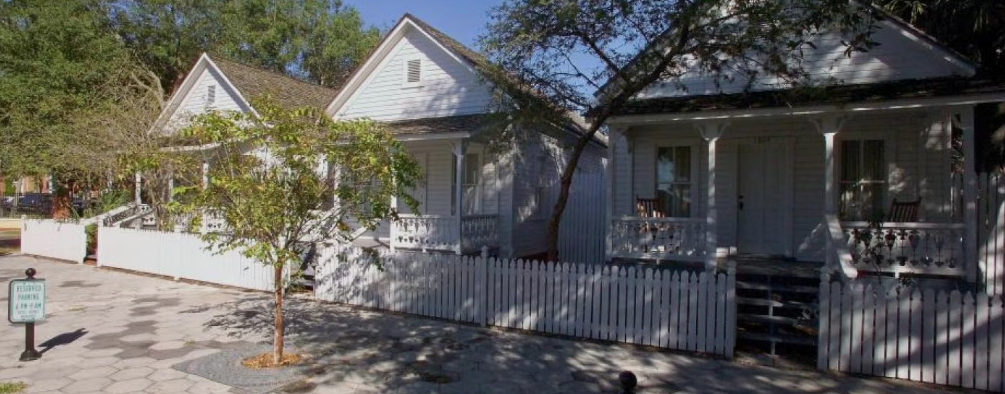
Behind the Ybor City Museum State Park sits a row of perfectly preserved wooden casitas—small shotgun-style cottages where Cuban, Spanish, Italian, and German cigar workers lived with their families during Ybor's boom years from the 1880s through the 1930s. The cigar companies built these as worker housing, renting them for modest sums. The structures are narrow because property taxes were based on street frontage—practical to the last detail. These vernacular wood-frame houses were designed for Tampa's brutal heat: narrow layouts allowed front-to-back airflow, high ceilings let hot air rise, and wide porches provided outdoor living space. Inside, the casitas have been meticulously restored and furnished with period-accurate furniture, family photographs, kitchen tools, and personal items that bring the immigrant experience to life. You can walk through bedrooms where multiple children slept, kitchens where women cooked Cuban and Spanish meals on wood-burning stoves, and parlors where families gathered after long shifts in the cigar factories. Outside, the museum has recreated the medicinal and culinary gardens immigrants maintained, growing herbs like yerba buena, cilantro, and rue that they brought from their home countries and used for cooking and healing. The casitas offer a rare, tangible connection to working-class life in early Tampa—a counterpoint to the grander buildings and success stories. Most visitors tour the museum's exhibits on cigar manufacturing and never venture into the garden courtyard where the casitas stand, making this a genuinely hidden piece of Ybor's history.
9
Centro Asturiano de Tampa
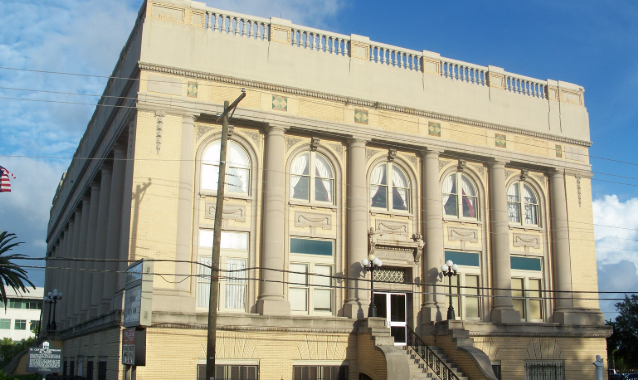
Rising majestically at the corner of Palm Avenue and Nebraska, the Centro Asturiano de Tampa is a testament to the wealth and ambition of Spanish immigrants who built Ybor City. Constructed in 1914 in Spanish Renaissance Revival style, this four-story social club served the Asturian immigrant community—cigar workers, merchants, and their families who came from Spain's northwest region. The building features a grand ballroom with 20-foot ceilings, ornate hand-painted tilework imported from Spain, wrought-iron balconies overlooking the street, a theater that hosted Spanish-language performances, and a basement that once contained a bowling alley, cantina, and billiards room. Members paid monthly dues for access to social events, medical care at the adjoining hospital, English classes, and a library stocked with Spanish literature. At its peak in the 1920s-30s, the Centro was the heart of Asturian cultural life in Tampa, hosting weddings, dances, political meetings, and community celebrations. The building fell into disrepair after Ybor's decline but was restored in the 1990s and now operates as an event venue. The ballroom's gilded details, original tile floors, and soaring windows remain stunning. Occasional tours reveal hidden spaces—the old hospital pharmacy, backstage dressing rooms, and the cantina where workers gathered after shifts.
Sponsored Pick
Advertisements help support our content
10
The L'Unione Italiana Cemetery
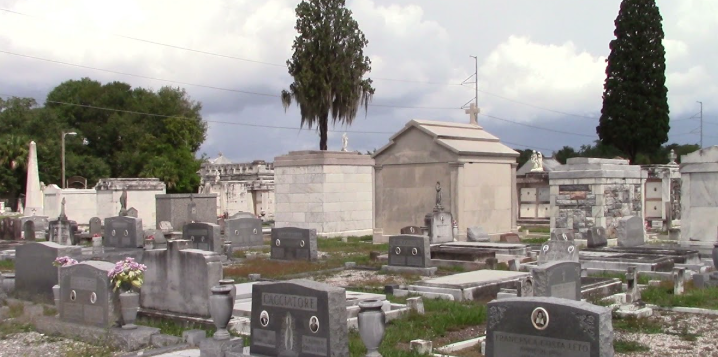
On a quiet residential block near Ybor City sits the L'Unione Italiana Cemetery, a forgotten burial ground where Italian immigrants—most of them Sicilian cigar workers and their families—were laid to rest between the 1890s and 1930s. The cemetery was established by L'Unione Italiana, a mutual aid society that provided Italian immigrants with health insurance, death benefits, and burial services in an era when such support was unavailable to working-class people. The graves are marked with simple headstones bearing Italian names—Licata, Ficarrotta, Pizzo—many inscribed in Italian with heartbreaking epitaphs for children who died young from disease, accidents, or the harsh conditions of early Tampa life. Some headstones have toppled or sunk into the sandy soil. A few graves are adorned with weathered ceramic portraits of the deceased, a Southern Italian tradition. The site is melancholic and largely forgotten except by descendants who occasionally tend family plots. Walking through, you're surrounded by the names of Ybor's cigar boom workers—immigrants whose labor built Tampa and whose names have faded from memory everywhere else.
11
King Corona Cigars Factory
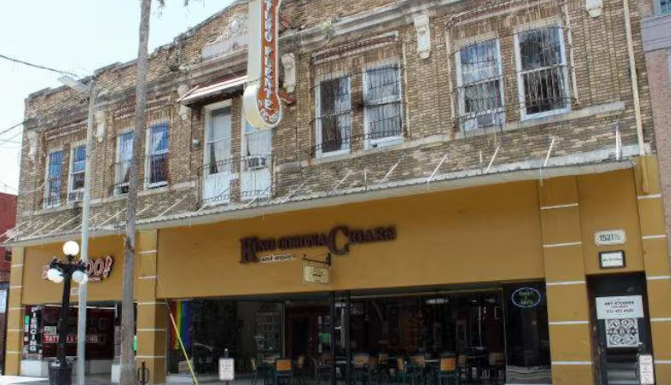
Walk into King Corona Cigars and you're stepping into Ybor City's past. This small, family-owned factory on 7th Avenue is one of the last places in Tampa where you can watch torcedores (master cigar rollers) hand-roll cigars exactly as they've been made for over a century. Unlike the larger, tourist-oriented factories, King Corona operates on a human scale: a handful of skilled rollers sit at wooden benches, selecting tobacco leaves, shaping filler and binder, applying the wrapper with practiced precision, and finishing each cigar with a guillotine cut. The process is meditative, unchanged since Cuban immigrants brought the craft to Ybor in the 1880s. The factory doesn't employ lectors (readers) anymore, but the atmosphere is authentic—the smell of tobacco fills the air, rollers chat in Spanish, and you can see the entire process from start to finish. The shop sells cigars directly from the rolling room at fair prices, and the staff is happy to explain the craft, recommend blends, and share stories about Ybor's cigar heritage. This isn't a show or a tourist attraction; it's a working factory continuing a tradition that defined Tampa. Most visitors to Ybor walk past without noticing. That's exactly why it's worth seeking out.
12
Manatee Viewing Center at TECO

At the TECO Big Bend Power Station in Apollo Beach, an unexpected ecological phenomenon occurs every winter: hundreds of West Indian manatees gather in the warm-water discharge from the plant's cooling system. Manatees are sensitive to cold and struggle when water temperatures drop below 68°F. The power plant discharges water at around 72°F into a protected canal, creating an artificial warm-water refuge that manatees have learned to depend on during Florida's cooler months. On the coldest winter mornings, as many as 300-400 manatees can be seen clustered in the discharge canal, breathing, nursing calves, and socializing in the warmth. The TECO Manatee Viewing Center, opened in 1986, provides an elevated observation platform, boardwalks, and interpretive exhibits explaining this unusual symbiosis between endangered wildlife and industrial infrastructure. The center is completely free, staffed by knowledgeable volunteers, and offers one of the best manatee-viewing experiences in Florida. Peak season runs from November through March, especially on cold mornings after a cold front. Beyond the manatees, the surrounding 50-acre park features nature trails, butterfly gardens, and birdwatching opportunities. It's a surreal and beautiful juxtaposition—smokestacks rising behind peaceful waterways where ancient marine mammals gather to survive. Most Tampa residents have no idea it exists.
6990 Dickman RdApollo Beach, FL 33572
WebsiteDaily 10am-5pm (Nov-Apr), weekends only (May-Oct)
Free admission and parking
Sponsored Pick
Advertisements help support our content
13
Dysfunctional Grace Art Co.
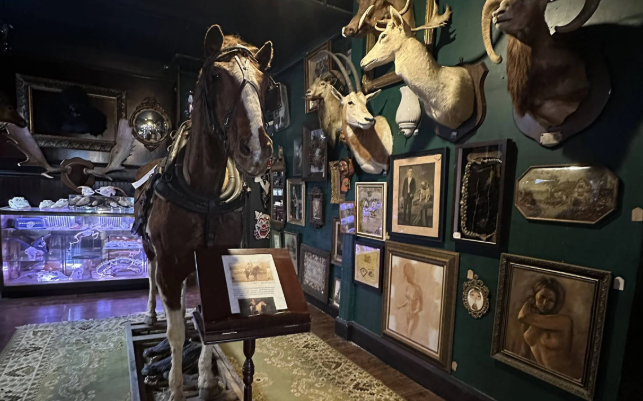
Tucked into a narrow storefront on 7th Avenue, Dysfunctional Grace is Ybor City's official little shop of the macabre—a cabinet of curiosities filled with taxidermy, skulls, vintage medical equipment, funeral home artifacts, handcrafted Ouija boards, crystals, and oddities that blur the line between art and the uncanny. Since 2010, the shop has been collecting and curating objects that most stores wouldn't touch: antique embalming tools, Victorian mourning jewelry, preserved insects in glass domes, baby dolls arranged in tiny coffins, and rare specimens of mushroom coral. But it's not just retail—the back of the shop houses a small museum room where the truly strange artifacts are displayed. Throw a few dollars in the donation box and explore shelves of medical anomalies, spiritual ephemera, and things that defy easy categorization. The staff offers tarot readings on select days and occasionally hosts beginner taxidermy workshops for those who want to try the craft themselves. Every Labor Day weekend, they host "Tabernacle of Oddities"—a full festival featuring live bands, expert talks on the uncanny, and a market of macabre vendors. A coffee bar attached to the shop lets you decompress after browsing the unsettling inventory. If you appreciate the strange, the beautiful, and the unsettling in equal measure, this is your place.
14
Wat Mongkolratanaram Thai Temple
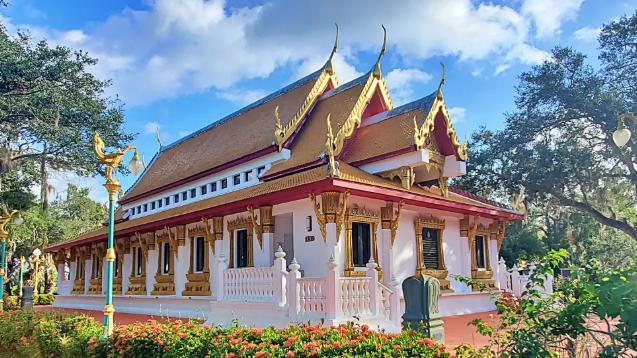
Every Sunday morning, thousands of people descend on a Buddhist temple on the banks of the Palm River for one of Tampa Bay's most beloved hidden traditions: the Thai Sunday Market. Since 1987, Wat Mongkolratanaram has hosted this weekly gathering where dozens of vendors sell authentic Thai food at prices that feel like a time warp—pad thai, green curry, papaya salad, noodle soups, mango sticky rice, fried bananas, and Thai iced tea, mostly under $5. The temple itself is stunning: a traditional Ayutthaya-style structure completed in 2007 with ornate golden spires, intricate carvings, and serene Buddha statues. In 2007, an emissary of King Bhumibol Adulyadej presented the temple with the royal Thot Kathin, the highest religious honor in Thailand—the first Buddhist temple in the United States to receive such recognition. The market runs rain or shine from about 8:30am until 1pm, but arrive before 10:30am or you'll be parking down the street. It's cash only, so hit the ATM beforehand. After eating, visitors are welcome to explore the temple grounds, though shoes must be removed and modest dress is required inside. Religious services follow at 1pm with meditation, chanting, and a sermon in Pali. The market draws 10,000 visitors weekly, yet somehow retains the feeling of a local secret. Tampa's best Sunday morning.
5306 Palm River RdTampa, FL 33619
WebsiteSunday Market 8:30am-1pm; temple grounds open daily
Free admission; food is cash only
Stay curious
New stories and hidden gems delivered to your inbox.
No spam. Unsubscribe anytime.
Explore More
Discover more curated guides and local favorites.
Tampa's Best Bars
Dive bars, cocktail lounges, and neighborhood favorites
Explore
Tampa's Best Restaurants
From fine dining to hidden gems and local favorites
Explore
Tampa's Best Coffee Shops
Local roasters, cozy cafes, and third wave spots
Explore
Tampa's Dark History
Unsolved mysteries and darker chapters
Explore
Tampa's Curiosities
Fascinating facts and surprising stories
Explore
Tampa's Abandoned & Lost Places
Beloved places we miss
Explore
Colorado Springs Best Bars
Dive bars, cocktail lounges, and neighborhood favorites
Explore
Colorado Springs Best Restaurants
From fine dining to hidden gems and local favorites
Explore
Know something we missed? Have a correction?
We'd love to hear from you